
Les lieux du Festival Valloire baroque
Le Festival Valloire baroque investit des lieux singuliers où patrimoine et musique dialoguent naturellement. Ici, chaque espace façonne l’écoute et participe pleinement à l’émotion du concert.
Patrimoine vivant
✳︎
Instants suspendus
✳︎
Écouter autrement
✳︎
Pierre & résonance
✳︎
Mémoire du territoire
Patrimoine vivant ✳︎ Instants suspendus ✳︎ Écouter autrement ✳︎ Pierre & résonance ✳︎ Mémoire du territoire
© A Pernet - OT Valloire
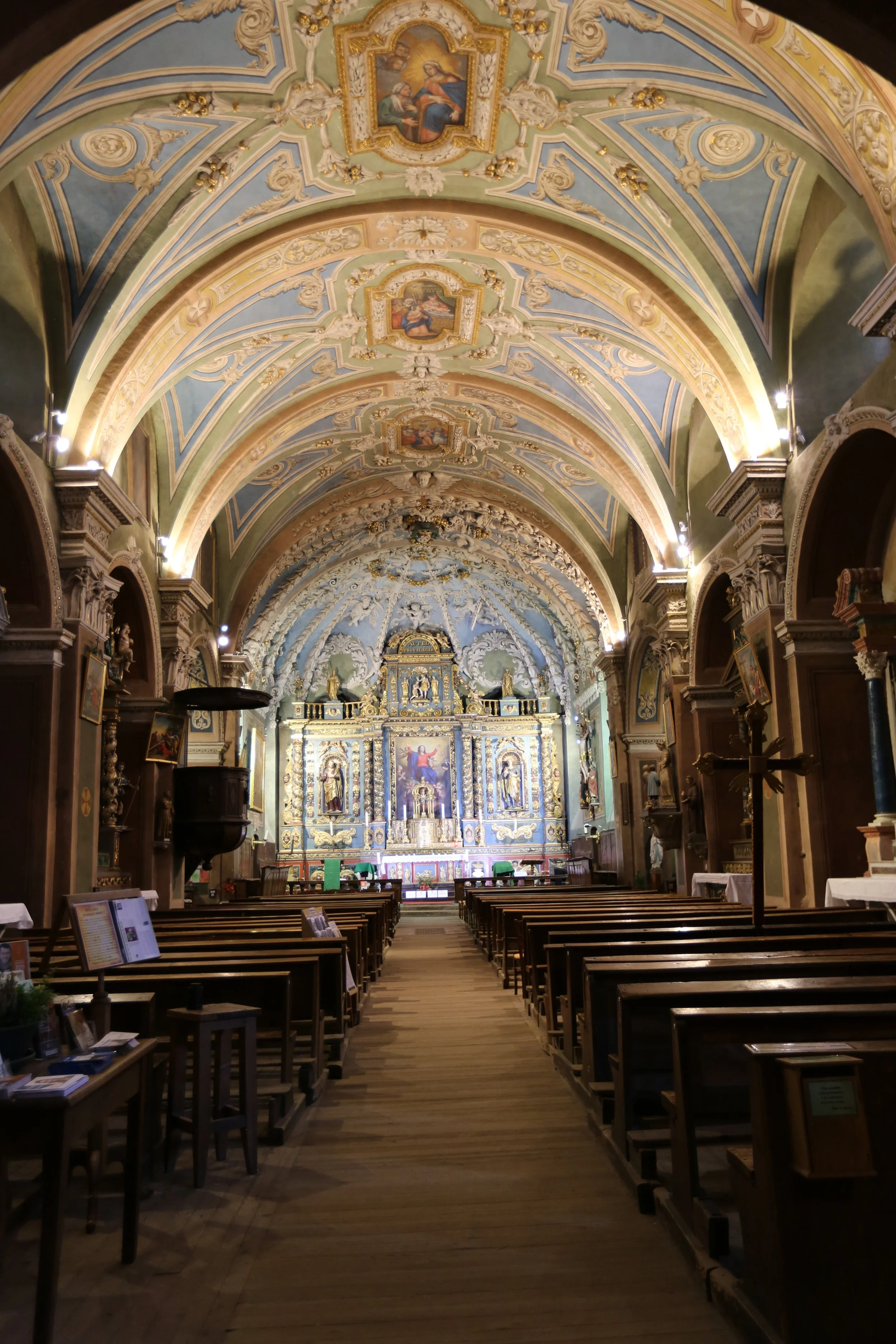
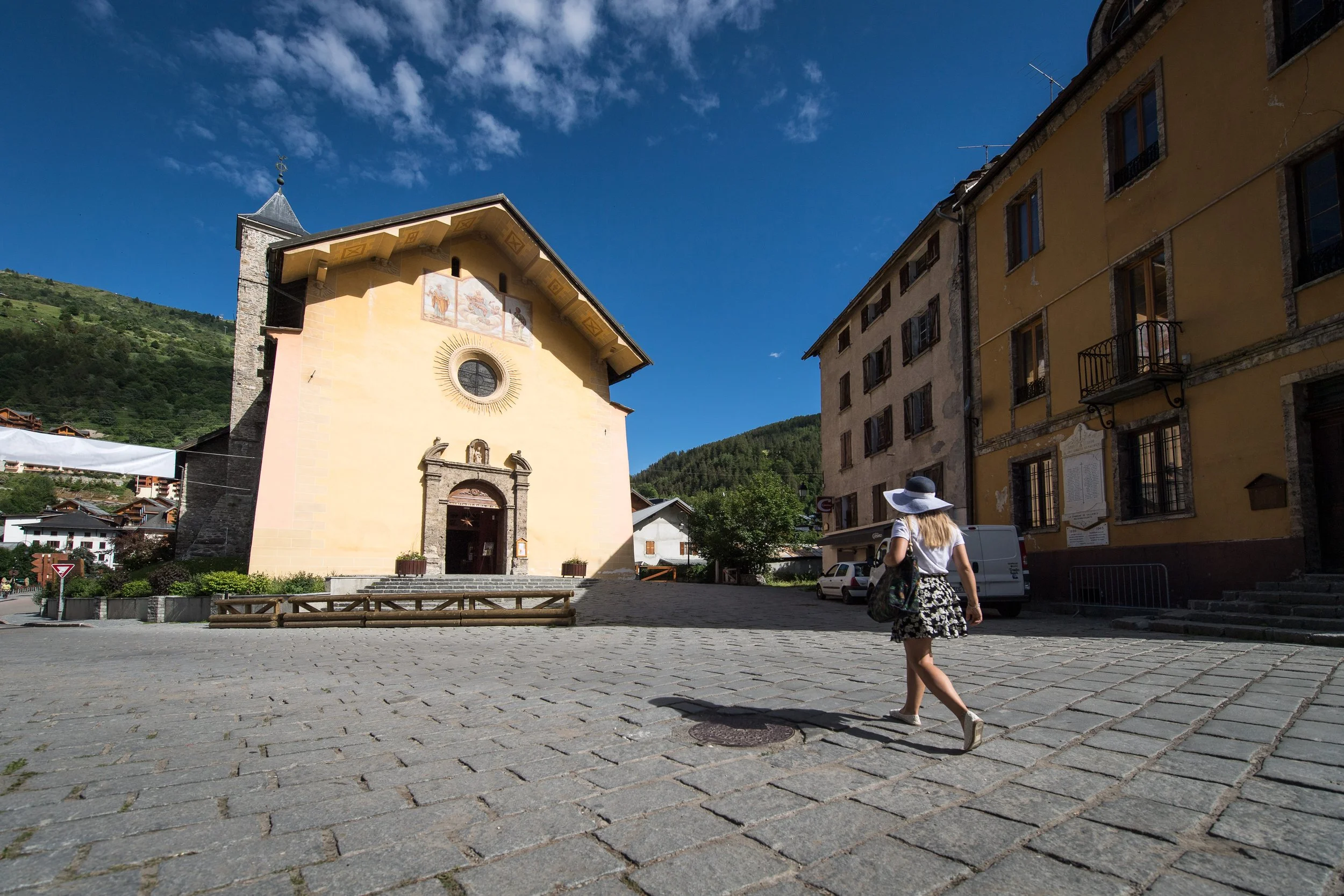
Dressée en partie sur un bloc erratique déposé par le glacier de la Valloirette, au centre de la cuvette, encadrée par les maisons du chef-lieu, appelé Place, elle peut être vue de tous les villages, sauf de ceux du Tiers Dessus qui ne peuvent la contempler car elle est masquée par le coude de la vallée et par le Rocher Saint-Pierre. Succédant sur le même emplacement à un édifice antérieur plus petit, probablement de style roman, l’église paroissiale Notre-Dame de l’Assomption fut reconstruite et décorée, de 1630 à 1682, dans le style baroque si répandu en Savoie du fait de son appartenance à un état situé des deux côtés des Alpes.
Cette reconstruction imposée par l’accroissement de la population locale (plus de 3000 habitants vers 1630) se fit en effet dans le strict respect de l’esprit de la Contre-Réforme, tel qu’il avait été défini par l’Église Catholique au Concile de Trente.
D’où l’exaltation des couleurs des peintures et le décor grandiose d’anges et de guirlandes de la gypserie du chœur au-dessus du grand retable sculpté par le chambérien François Rimelin avec, au-dessus de l’autel, un tabernacle doré rappelant l’importance de l’Eucharistie. L’église compte également huit autels latéraux dont les peintures rappellent tantôt les dévotions chères à l’époque, tantôt la fréquentation de pèlerinages situés en Piémont (Oropa) ou près de l’Adriatique (Loreto). La voûte de la nef peinte en trompe-l’œil met en scène, dans des médaillons, des scènes de la vie de la Vierge et du Christ. Ce monument prestigieux par la richesse de son mobilier et de son décor a été classé par les Monuments Historiques dès 1945.
L’église baroque de Valloire
© OT Valloire
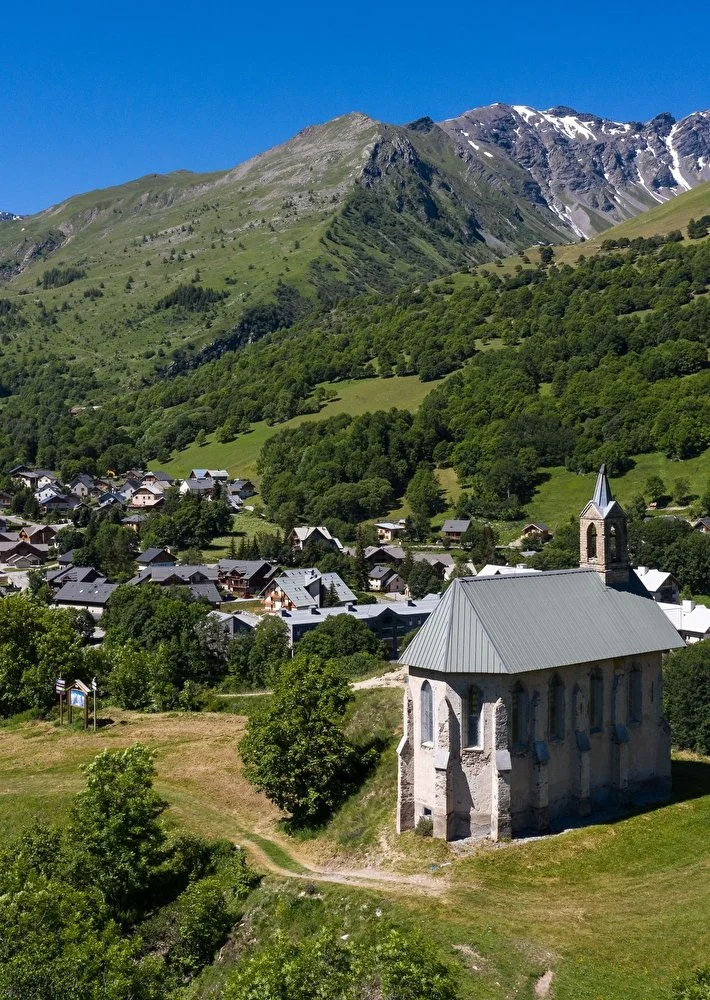
Pour les voyageurs qui descendent vers la cuvette de Valloire, la vue sur le Galibier est masquée par un double éperon calcaire, Poingt-Ravier et le Rocher Saint-Pierre, un verrou glaciaire. Les promeneurs à mi-pente peuvent admirer une magnifique chapelle néogothique, Saint-Pierre construite en 1858. Le bâtiment est isolé près d’une butte herbeuse, surmontée autrefois d’un château, ayant appartenu aux évêques de Maurienne qui exigeaient redevances en nature et corvées des habitants de Valloire. Rapidement des notables résidant dans de belles maisons de village furent châtelains au nom de l’évêque. Dès le XVIe siècle le château était en ruine. La piste de ski à gauche en montant a effacé en grande partie les traces du village des Sellettes qui utilisait la chapelle castrale comme lieu de culte. Des valloirins se rappellent que ce village était encore habité dans les années 50 ; à l’heure actuelle, il reste deux maisons en ruine dans un bosquet masquant ainsi définitivement l’existence de ce village.
La chapelle Saint-Pierre
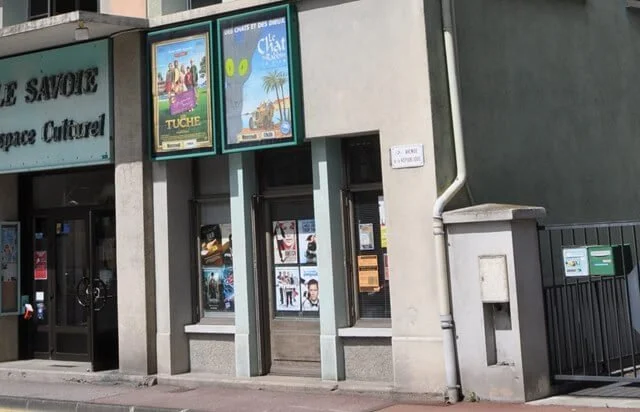
Depuis 1992, l’Association Cinéma et Culture Maurienne propose une programmation culturelle de spectacles vivants et cinématographique pour tous.
Son cinéma, classé ART & ESSAI, programme 8 à 10 séances par semaine et des séances dédiées : Jeune Public et famille, publics fragiles et isolés, scolaires… Sa scène accueille une quinzaine de représentations par an de théâtre, danse, cirque, conte, musique, marionnette, art numérique. De nombreuses actions de médiations autour de ces programmations sont organisées : rencontres, débats, ateliers… Sa salle peut accueillir jusqu’à 188 spectateurs.
Enfin, chacun peut s’impliquer, à sa façon, dans la dynamique collective de l’association afin de devenir, plus qu’un simple spectateur, un véritable acteur de sa vie culturelle.
L’espace culturel Le Savoie, Saint-Michel-de-Maurienne
© OT Valloire
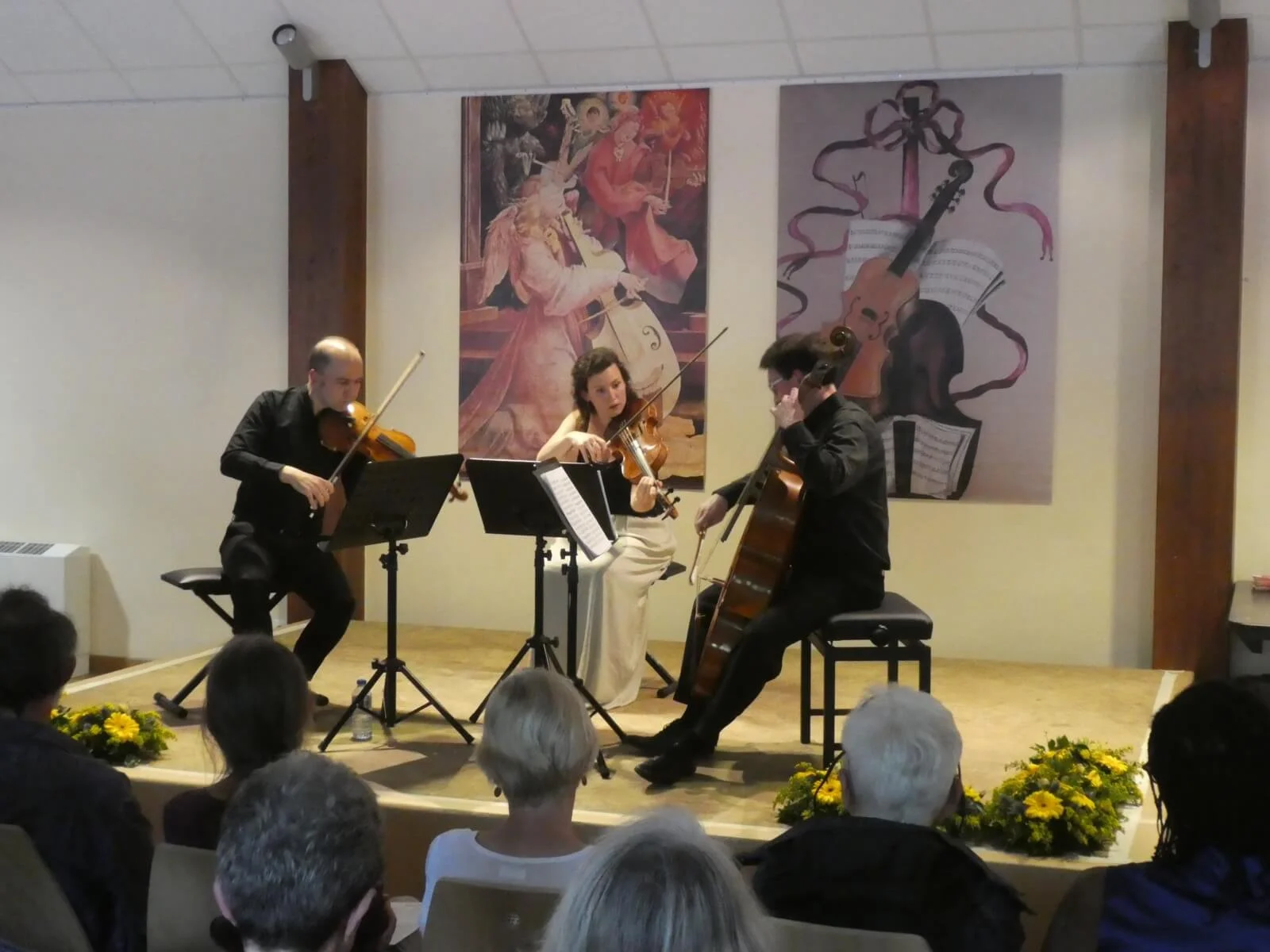
Site des concerts de La Traverse depuis 2018 (à l’exception de Valloire enchanté).
Cette magnifique salle polyvalente a été aménagée au-dessus de la caserne de pompiers ; elle accueille de nombreuses manifestations culturelles organisées par la commune. Elle porte le nom de l’un des grands pionniers du tourisme d’hiver à Valloire, créateur, dès 1937, de la première remontée mécanique de la station.
La salle Gabriel Julliard
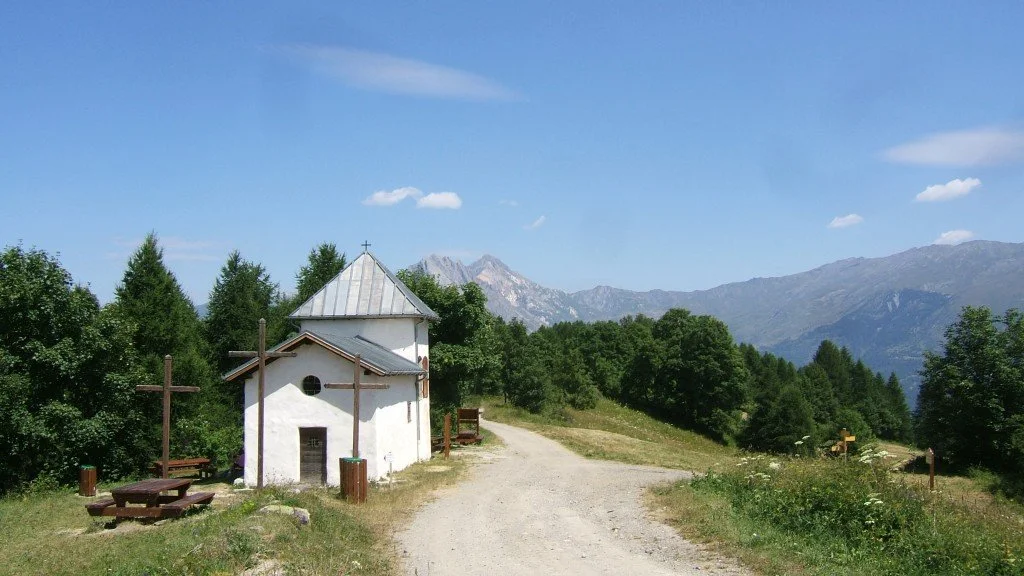
La chapelle des Trois-Croix
Oubliez la route. Prenez le chemin aux herbes folles, aux murets de chèvres, aux vernes qui tendent au ciel leurs vieilles cicatrices.
Prenez le chemin fait par les hommes pour que les mulets passent, ou alors celui tracé par le pas des troupeaux pour adoucir la peine des bergers. Allez sur le chemin, ce passe-montagne pour la tourmente et les caprices des saisons, suivez le jusqu’à la chapelle de la Vie, où les bois de trois croix embrassent le pays. Prenez le chemin, puis posez votre sac sur l’herbe fleurie et oubliez la route.
Cette reconstruction imposée par l’accroissement de la population locale (plus de 3000 habitants vers 1630) se fit en effet dans le strict respect de l’esprit de la Contre-Réforme, tel qu’il avait été défini par l’Église Catholique au Concile de Trente.
D’où l’exaltation des couleurs des peintures et le décor grandiose d’anges et de guirlandes de la gypserie du chœur au-dessus du grand retable sculpté par le chambérien François Rimelin avec, au-dessus de l’autel, un tabernacle doré rappelant l’importance de l’Eucharistie. L’église compte également huit autels latéraux dont les peintures rappellent tantôt les dévotions chères à l’époque, tantôt la fréquentation de pèlerinages situés en Piémont (Oropa) ou près de l’Adriatique (Loreto). La voûte de la nef peinte en trompe-l’œil met en scène, dans des médaillons, des scènes de la vie de la Vierge et du Christ. Ce monument prestigieux par la richesse de son mobilier et de son décor a été classé par les Monuments Historiques dès 1945.
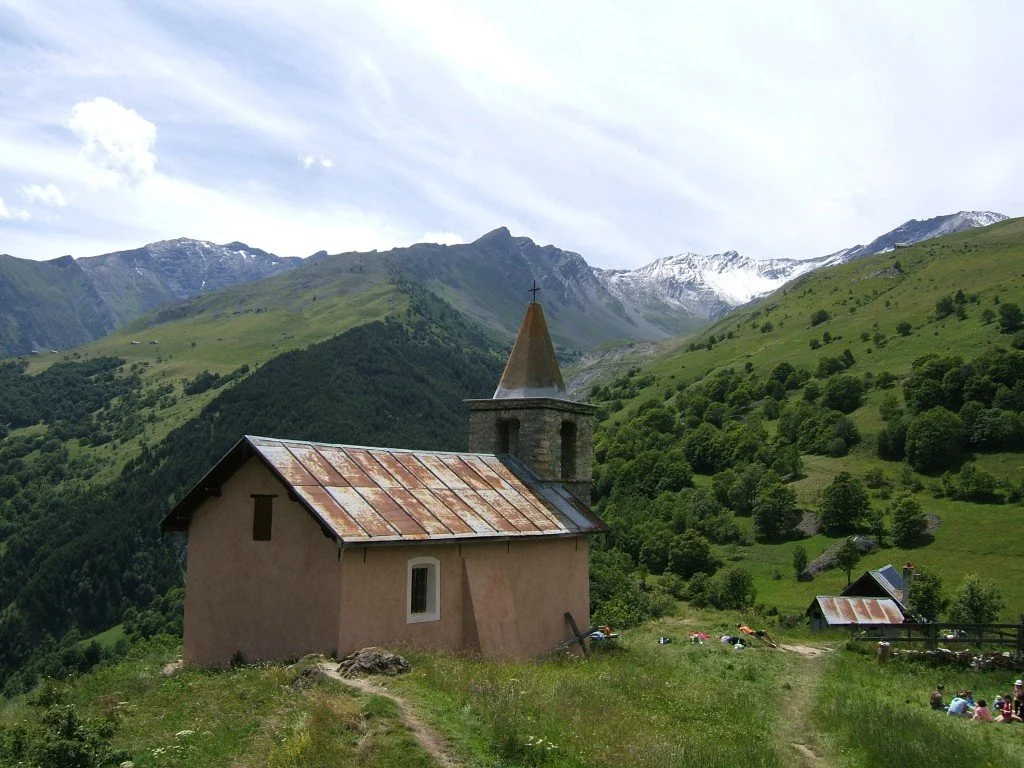
La chapelle de Poingt-Ravier
Cette chapelle, bâtie en 1624 juste au-dessus du hameau, sert de repère aux habitants du Tiers Dessus. Dotée d’un clocher-porche, elle possède une salle de culte modestement décorée avec, au-dessus de l’autel, un tableau représentant Marie-Madeleine versant du parfum sur les pieds du Christ. Cette dévotion s’est développée à partir du XVIIe siècle car la Madeleine est devenue, après Saint-Bernard des Alpes, la protectrice des passages. On peut apercevoir, en effet, au fond de la vallée de la Valloirette, les vallons qui conduisent, à gauche vers le col des Rochilles, à droite vers le col du Galibier, deux passages frontaliers avant 1860 faisant communiquer la Savoie avec le Dauphiné français.
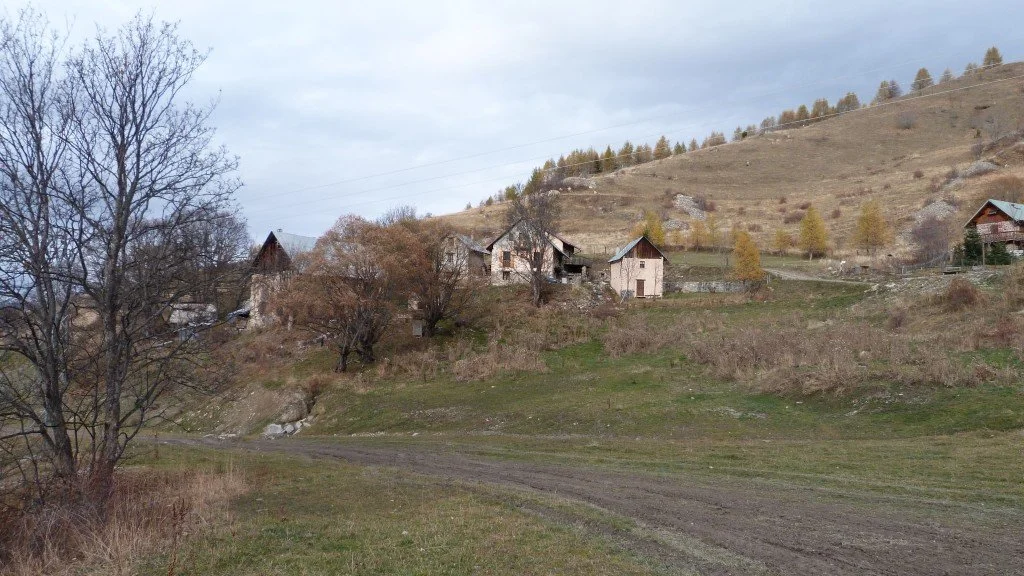
Le hameau de Poingt-Rogereil
Le hameau de Poingt-Rogereil était jusqu’au XIXe siècle habité toute l’année. Son éloignement des autres villages de Valloire, et son chemin muletier impraticable en hiver,furent la cause de sa déshérence.
Aujourd’hui, on y trouve l’été une bergerie d’alpage active et quelques vieux chalets que des vacanciers font revivre. Jusqu’à ces dernières années une piste de ski, descendant du crêt du Quart, se faufilait en douceur entre les maisons endormies sous leurs toits ourlés de neige. Au long des belles journées d’été les randonneurs passent ici, ils viennent du col des Trois-Croix ou des prairies de la vallée de l’aiguille Noire.
“Poingt” vient du latin podium et signifie mamelon, montagne peu élevée. Quant à “Rogereil” c’est une trace des “Roger” et des “Rogeraux” patronymes disparus de nos jours. Toutefois Blaise Rogerel a laissé son nom à la chapelle bâtie sur le même versant de la montagne, à l’Archat, puisqu’il en fut le fondateur en 1653… C’était à cette époque que les arts baroques fleurissaient, ils perdurent aujourd’hui pour notre plus grand plaisir !
Le hameau de Bonnenuit
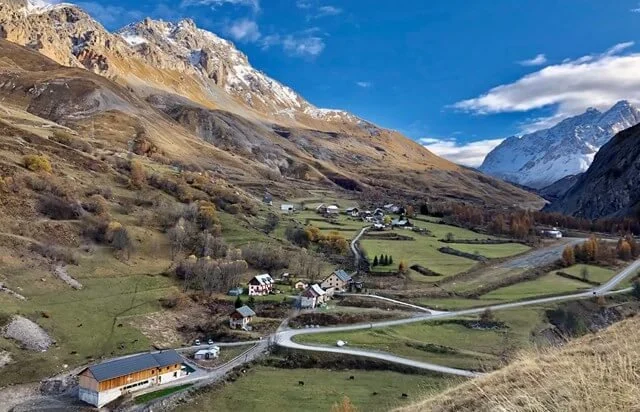
Bonne-Nuit… Quel drôle de nom pour un village de montagne! C’est le premier hameau de Valloire en venant du Galibier, et longtemps le plus peuplé car ici vivait, au XIXe, une cinquantaine de familles. Son nom viendrait d’une auberge qui avait ces deux mots comme enseigne. Au fil des âges sont passées à Bonne-Nuit les troupes de François Ier, celles de l’infant Don Philippe d’Espagne, celles du maréchal De Berwick au service de Louis XV, et aujourd’hui le champ de tir de nos artilleurs n’est pas très loin!
Levons les yeux. De la Sétaz-Vieille descend un torrent redouté autrefois. En face le triptyque des aiguilles d’Arves où les premières traces de brodequins furent laissées par deux Valloirins, les frères Magnin , en 1839… Devant nous, en toile de fond, le bicorne du Grand-Galibier. C’est le protecteur de la vallée, avec Saint Gras et Notre-Dame des neiges invoqués dans les deux chapelles du village. Et là, tout près, sur l’autre versant de la Valloirette, des hardes de chamois broutent l’herbe sous la garde d’un pin cembro solitaire et débonnaire.
Dans les chemins de Bonne-Nuit déboulent parfois à l’improviste des marmottons que leur maman, d’un cri, rappelle à la prudence, et quand le vent du soir coule dans la vallée c’est une musique céleste qui élève nos cœurs.
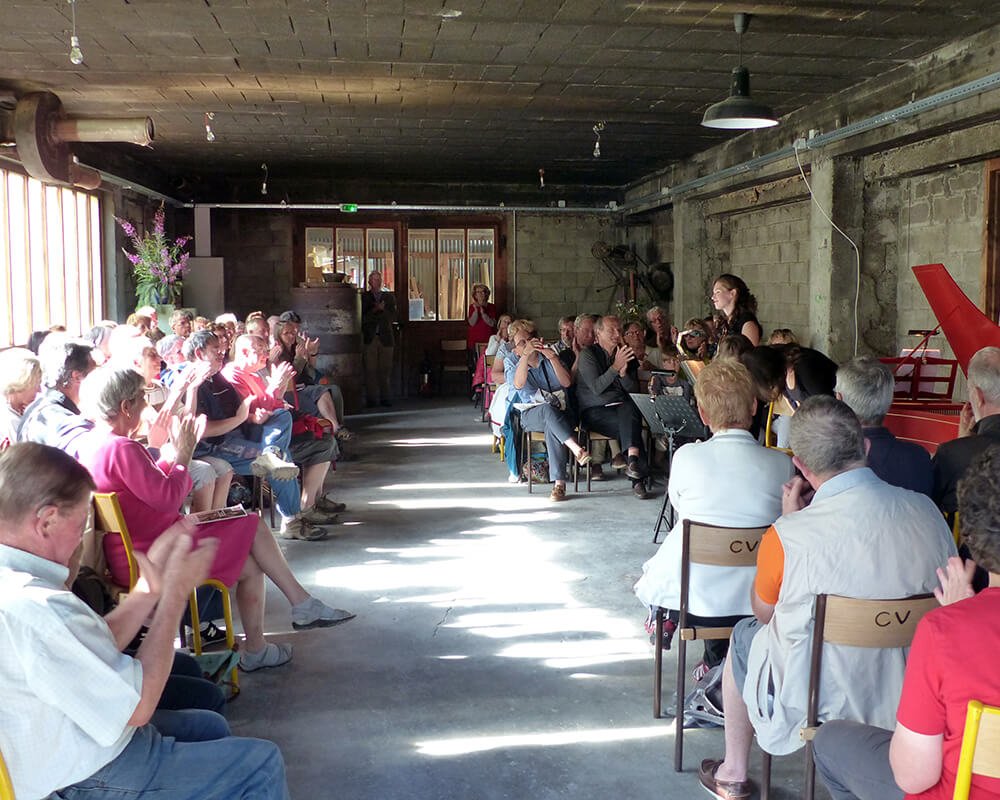
Site des concerts de La Traverse entre 2014 et 2017
Grâce à la volonté de deux associations : “Valloire Art Contemporain” et “les Amis du Festival Valloire baroque”, la Scierie revit. Martine RAPIN, sa propriétaire, raconte les souvenirs heureux et malheureux liés à son histoire : « La Scierie appartenait à mon père, un passionné de bois. C’était un lieu exceptionnel. On y charriait des arbres entiers treuillés depuis les forêts environnantes, on les transformait en “planches”, ensuite en toute sorte d’objets qu’il adorait assembler. Et puis, il y a eu la coulée de boue. Tout a été saccagé – comme le moral de mon père… » Pour honorer la mémoire de son père, M. RAPIN a souhaité faire de ce bâtiment un lieu d’art et de partage ; quoi de mieux pour commencer que d’accueillir de jeunes ensembles très talentueux.